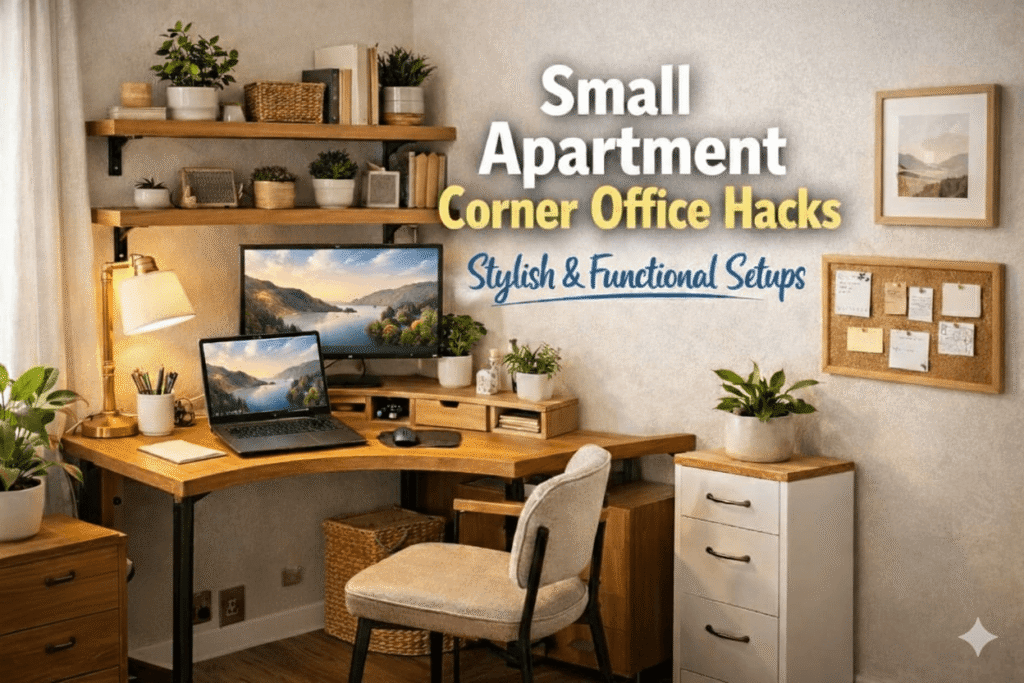

Introduction: Turning Tiny Corners Into Powerful Workspaces
Working from home in a small apartment can feel overwhelming, especially when your dining table, bed, and workspace all share the same room. But what if that unused corner of your room could become your most productive spot of the day?
In this home office setup guide, I’ll walk you through smart, real-world corner office hacks that combine style, comfort, and productivity without needing a separate room or a big budget. I’ve tested many of these ideas in compact apartments, and workspace psychology research also shows that an organized, personalized workspace can significantly improve focus and reduce stress.
Why a Corner Office Works Best in Small Apartments
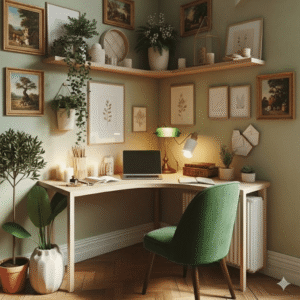
Corners are often underused spaces, perfect for compact desks, shelves, and vertical storage. A corner office setup maximizes space efficiency while keeping your living area clutter-free.
Key Benefits of a Corner Home Office
- Makes use of otherwise wasted space
- Keeps work contained to one area (better work-life boundaries)
- Allows vertical storage and lighting optimization
- Enhances room aesthetics when styled thoughtfully
Interior designers often recommend visually zoning your apartment. Creating a distinct work zone helps your brain distinguish between work and relaxation.
Corner Office Setup Styles: Minimal vs. Feature-Rich
Choosing a style depends on your work needs and apartment size. Here’s a quick comparison to help you decide.
| Feature | Minimal Corner Setup | Feature-Rich Corner Setup |
| Desk Size | Compact wall-mounted or floating desk | L-shaped or adjustable desk |
| Storage | 1–2 shelves or a drawer unit | Shelving unit, pegboard, cabinets |
| Lighting | Clip lamp or small desk lamp | LED strips, task lamp, and ambient lighting |
| Cost | Budget-friendly | Medium to high investment |
I started with a minimal setup, a floating desk, and a lamp. Over time, adding shelves and a second monitor dramatically improved my workflow without making the corner feel crowded.
Smart Small Apartment Corner Office Hacks
1. Choose the Right Desk for Corners
The desk is the foundation of your workspace. In small apartments, the wrong desk can make the area feel cramped.
Best desk options for corner offices:
- Floating wall-mounted desks
- Compact corner desks
- Fold-down desks for multipurpose rooms
- Narrow writing desks (40–60 cm depth)
If you rent, use heavy-duty wall anchors or a slim console table to avoid drilling too much.
2. Use Vertical Space Like a Pro
Vertical storage is the secret weapon in home office setup guides for small spaces. Walls are often underutilized.
Ideas to maximize vertical space:
- Floating shelves above the desk
- Pegboards for tools and accessories
- Wall-mounted file holders
- Tall bookcases that fit into corners
Research in workspace design suggests that keeping frequently used items within arm’s reach reduces cognitive load and boosts efficiency.
3. Smart Lighting for Small Corners
Lighting can transform a dull corner into an inspiring workspace.
Lighting layers to consider:
- Task lighting: desk lamp with adjustable arm
- Ambient lighting: LED strip lights or floor lamp
- Accent lighting: wall sconces or small decorative lights
Switching from a single overhead bulb to layered lighting reduced eye strain and made my corner office feel more professional.
4. Ergonomics in Tiny Spaces (Yes, It’s Possible)
Many people think ergonomics requires a big office, but small adjustments make a huge difference.
Ergonomic corner office essentials:
- Adjustable chair with lumbar support
- Laptop stand or monitor riser
- External keyboard and mouse
- Footrest or small stool
Experts in ergonomics emphasize that proper posture reduces fatigue and improves productivity, even in compact setups.
5. Storage Hacks to Avoid Clutter
Clutter is the enemy of small spaces. Use hidden and smart storage solutions.
Storage hacks:
- Drawer organizers under the desk
- Stackable bins or baskets
- Rolling carts for supplies
- Under-desk shelves or cabinets
Keep only daily-use items on the desk surface. Store everything else out of sight.
6. Make It Stylish Without Overcrowding
A corner office should blend with your home decor.
Style tips:
- Use a consistent color palette (neutral tones work best)
- Add one or two decorative items (plant, framed art)
- Choose slim furniture with clean lines
- Use cable management boxes or clips for a clean look
Interior design studies show that visually pleasing environments can boost creativity and motivation.
Practical Strategies for Multi-Purpose Rooms
In small apartments, your office corner often shares space with the bedroom or living room. Smart zoning is key.
Zoning Techniques
- Use a rug to define the workspace
- Place a small room divider or curtain
- Use different wall colors or wallpapers
- Position the desk facing away from the bed or sofa
Adding a small rug under my desk psychologically separated work from relaxation it surprisingly improved my focus.
Common Mistakes to Avoid in Corner Office Setups
Even with the best home office setup guides, people make common mistakes that reduce functionality.
Avoid these pitfalls:
- Choosing a desk that’s too deep or bulky
- Ignoring cable management (creates visual clutter)
- Overdecorating the corner
- Skipping ergonomic furniture
- Poor lighting (especially in windowless corners)
Measure your corner before buying furniture; centimeters matter in small apartments.
Workspace psychology research shows that:
- Organized desks improve concentration and task performance
- Natural light exposure enhances mood and productivity
- Personalized decor increases motivation and job satisfaction
Experts in environmental psychology also recommend separating work and leisure zones even in tiny homes to prevent burnout.
Budget-Friendly Corner Office Setup Checklist
Here’s a quick checklist to build your corner office without overspending:
- Compact desk or floating shelf
- Comfortable chair (even second-hand)
- Desk lamp or LED strip lighting
- 1–2 floating shelves
- Laptop stand and external keyboard
- Basic cable management clips
- One plant or decor item
You can gradually upgrade as your needs and budget grow.
Designing a Corner Office That Feels Like a Real Office
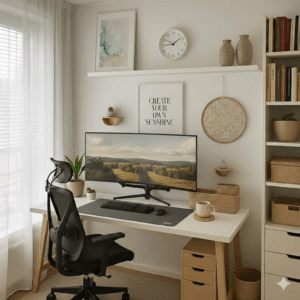
When I first tried working from a corner of my bedroom, it felt temporary, like a placeholder until I could afford a bigger space. But over time, I realized that a thoughtfully designed corner office can feel just as professional and inspiring as a dedicated room.
This section expands on home office setup guides with more persuasive and technical insights, so you can design a corner workspace that supports long-term productivity, not just short-term convenience.
The Psychology of Corners and Productivity
Corners naturally create a sense of enclosure, which can help your brain switch into “focus mode.” Environmental psychologists often note that semi-enclosed spaces reduce distractions and improve deep work performance.
Why corners work psychologically:
- They reduce visual noise from the rest of the room
- They create a boundary between work and life
- They feel intentional, even in open-plan apartments
Once I repositioned my desk into a true corner (instead of along a wall), my concentration improved noticeably, as fewer visual distractions meant fewer mental interruptions.
Technical Layout Planning for Small Corner Offices
Before buying furniture, plan your layout like a designer. A few centimeters can make or break comfort in compact spaces.
Step-by-Step Corner Layout Planning
- Measure the corner width and depth (include baseboards and door swings)
- Decide your primary device (laptop vs. dual monitors)
- Plan chair clearance (minimum 80–90 cm behind the desk)
- Map power outlets and cable routes
- Choose vertical storage zones above or beside the desk
Advanced Styling Hacks for a Designer-Look Corner Office
If you want your setup to look Instagram-worthy while staying functional, use these advanced styling techniques.
Layered Styling Formula
- Base layer: Desk, chair, shelves
- Functional layer: Lamp, keyboard, monitor, storage
- Decor layer: Plant, framed print, personal object
Stick to a 60-30-10 color rule (60% neutral, 30% secondary color, 10% accent) to keep the corner visually balanced.
Productivity Strategies for Corner Workspaces
A beautiful corner office is useless if it doesn’t support productivity. These strategies are based on remote-work best practices.
Focus-Boosting Strategies
- Use noise-canceling headphones or white noise
- Keep a minimalist desk layout (only daily essentials)
- Set a visual “end-of-work” ritual (closing laptop, turning off lamp)
- Use a timer method (Pomodoro or time-blocking)
Turning off my desk lamp at the end of the day became a mental switch that helped me disconnect from work even though the office was in my bedroom.
Corner Office Setup for Different User Types
Not all users need the same setup. Here’s how to customize your corner office based on your work style.
For Students
- Foldable desk or wall-mounted shelf
- Compact chair
- Basic lamp and shelf
For Remote Professionals
- Ergonomic chair and adjustable desk
- Dual monitors or an ultrawide monitor
- Docking station and cable tray
For Creatives (Designers, Writers, YouTubers)
- Pegboard for tools and accessories
- Extra lighting for content creation
- Sound-absorbing panels or curtains
Conclusion: Small Corner, Big Productivity
A small apartment doesn’t mean you have to compromise on productivity or style. With thoughtful design, smart storage, and ergonomic choices, a tiny corner can become a powerful home office.
This home office setup guide proves that functionality and aesthetics can coexist even in the smallest spaces. Start with the essentials, keep it clutter-free, and personalize it gradually.
If you enjoyed this article, explore more home office setup guides on our blog for in-depth tutorials, budget setup ideas, and ergonomic tips. And don’t forget to bookmark this guide, you’ll want to revisit it when you upgrade your workspace!